
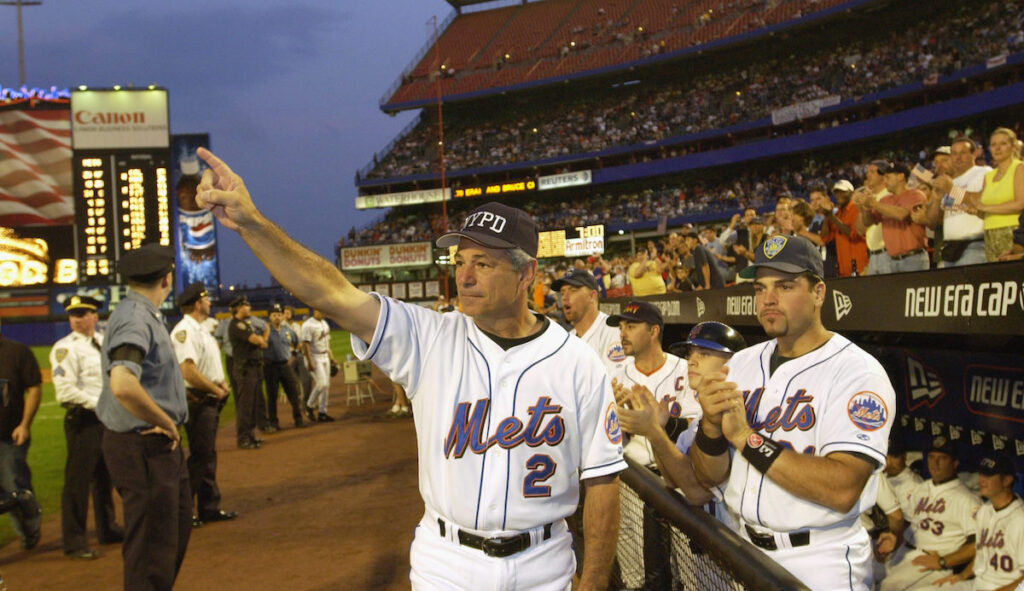
On a cool Friday night in Queens, ten days after the Twin Towers fell, the city found its voice again.
Flags draped the outfield. Bagpipes cut through the September air. And first responders took their seats at Shea Stadium for the first game back in New York City after 9/11.
It was quiet and not quiet; solemn and electric at once. Everyone there felt two truths at the same time: the grief was still heavy, and yet, for a few hours, we were allowed to be together.
We were allowed to breathe.
I grew up in Flushing, one subway stop from Shea. In a city split by rivalries, being a Mets kid meant learning to love the underdog.
On September 11, 2001, I was in a college dorm upstate, glued to the TV like everyone else. Everything was de-prioritized. I went to the temporary Red Cross setup at school to give blood, willingly, for the first time in my life.
It wasn’t much but it was something I could do at that moment.
The Night the Rivalry Paused
The Mets and Braves had every reason to dislike each other. But that night, the usual needle vanished. Before first pitch, the teams stood shoulder to shoulder, honoring first responders and the people who lifted the city in its darkest hours.
Braves manager Bobby Cox put it simply: “The Mets weren’t the enemy after all, for about 10 minutes.” The line got a laugh, then a nod because everyone understood what he meant.
From the Braves’ side, the game was a duty carried out with grace. From the Mets’ side, it was a vigil that happened to keep score.
The At-Bat
Baseball did what baseball does: it built suspense by inches. In the eighth, the Mets trailed 2–1. Steve Karsay, a Queens kid himself, took the mound for Atlanta.
“This one has a chance!”
Two outs from closing the door, the game tightened. Mike Piazza stepped in. Howie Rose, trying to keep his voice even on the broadcast, offered the understatement of a lifetime: “This one has a chance!”
A heartbeat later, left-center erupted.
Karsay has always spoken about the moment without defensiveness or regret. “Being a New Yorker… there was a lot of raw emotion,” he’s said. “It’s something that will be etched in my brain.” He later added the kind of grace that makes rivals feel like neighbors: if there was ever a time you’d accept giving one up, “that was the time.”
From Piazza’s side, the swing was physics meeting feeling. “When you have a lot of people pulling for you, you feel it,” he said years later. The ball found the black of the batter’s eye; 41,000 people found their voices.
Some shouted. Some cried. Most did both.
Even Bobby Valentine, the Mets manager then, could only reach for something bigger: “It was so much bigger than anything I had ever been a part of.” Bigger than a box score. Bigger than bragging rights.
What It Sounded Like
Every famous call sits with you in a particular way.
Rose’s line has become the shorthand, “This one has a chance!” but the sound that still lives in people’s chests is the crowd afterward.
It wasn’t just loud; it was a relief, a release, a chorus of people who needed permission to be happy for a breath. Tom Rinaldi would later frame the truth of it: the home run didn’t bring anyone back. It didn’t undo the week, but it did what sports are supposed to do.
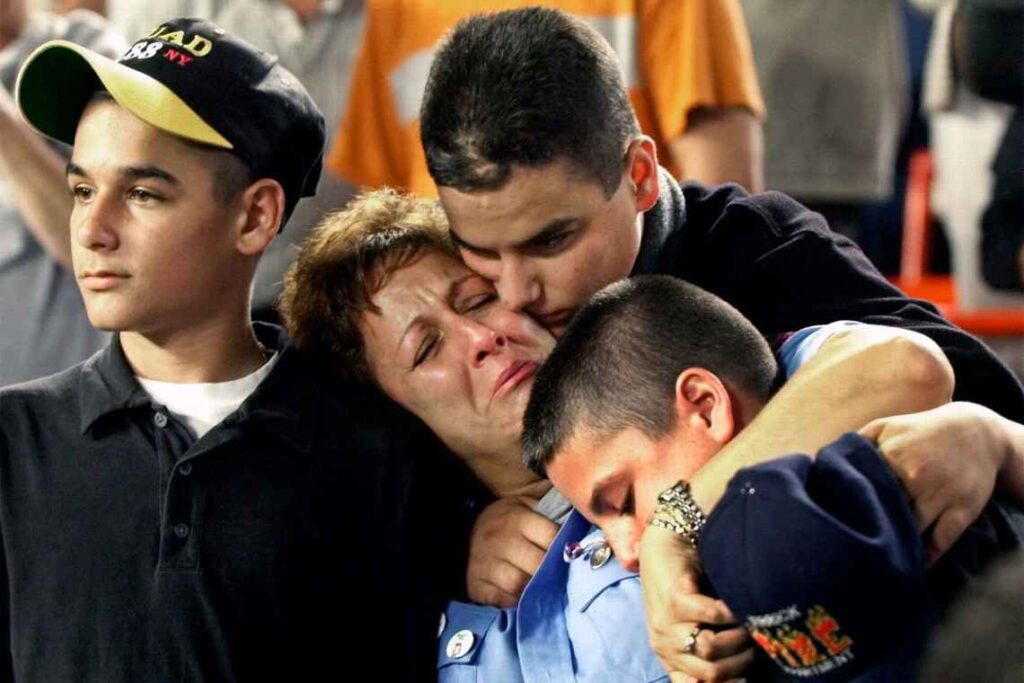
In the stands that night were families who had lost someone ten days earlier. Carol Gies, whose husband, FDNY Lt. Dennis G. Cross didn’t come home, said it as clearly as anyone ever could:
“I will forever be grateful… that was the first time I saw my children smile since their dad was gone.” Read that again. A smile, after the unthinkable, because a catcher got a pitch he could handle and turned on it.
Sports are beautiful because they are ordinary; their miracles are accessible. That’s why the night still matters.
The Mets and Braves’ View
For the Mets, it wasn’t about salvaging a season. It was about showing up for the city.
The team’s own look back says it all. Security was tight, nerves were high, and then, after that swing. The ballpark shared one truth. It wasn’t just a win but New York’s first smile.
Ask around Braves alumni, and you’ll hear versions of the same thing: they were there to compete, but also to stand in the right place at the right time.
Karsay’s grace speaks for pitchers. And Cox’s line speaks for managers.
The rivalry paused. It had to.
The Jersey and the Journey
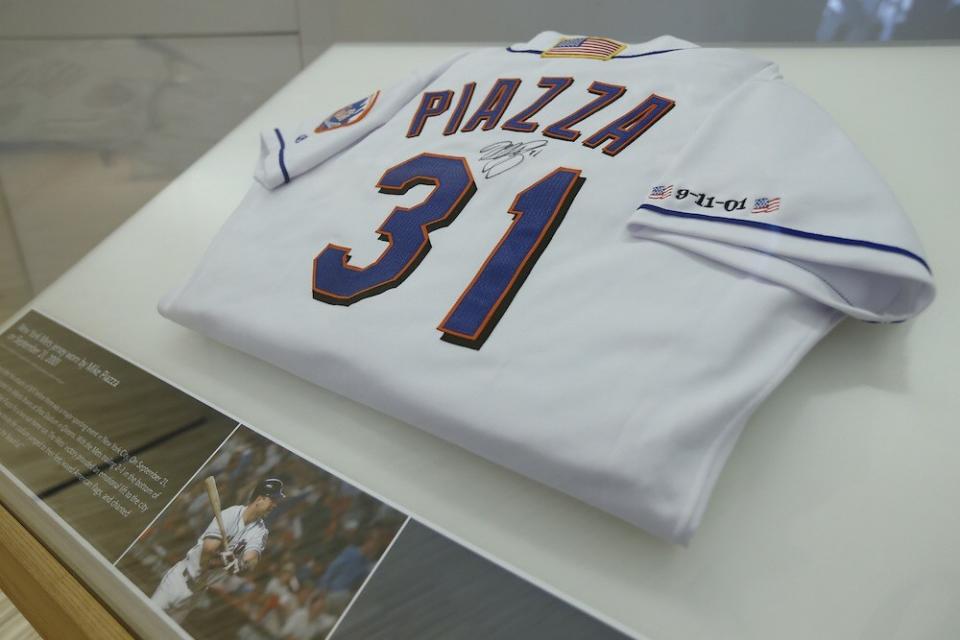
Years later, Piazza’s jersey from that game sparked another public conversation when it went to auction.
It didn’t belong to a basement; it belonged to all of us. Three Mets minority partners stepped in to buy it, on the condition it would live where New Yorkers could see it- on long-term loan to the 9/11 Memorial & Museum and the Hall of Fame.
The number attached to that deal made headlines; the promise attached to it mattered more.
When the jersey went on display at the 9/11 Museum, it does what artifacts are supposed to do: it tells a story without words. “It’s a reminder… of our ability to be strong for one another,” the museum’s president said.
That line is why some of us collect anything at all whether that be tickets, programs, balls, jerseys. We’re not hoarding objects; we’re preserving proof.
I don’t expect to own that jersey. But I do have a ticket from that night.
It’s paper thin, edges soft, but story heavy.
It sits in an archival sleeve, away from light.
Why We Remember
There’s always a debate, after tragedy, about the role of games. Are they a distraction or balm? Maybe they are neither and both. Maybe they’re just the easiest place to gather when words fail.
Piazza has said he felt all of our hopes on his back as he walked to the box, “when you have a lot of people pulling for you, you feel it.”
Karsay has said the night will live with him forever. Cox told a truth about rivals joining hands. Valentine, years later, still reaches for words beyond baseball. They’re all trying to describe the same thing: a few seconds in which a swing let grief and hope share a room.
Sports Are Meant to Unite Us
The most beautiful thing about that night is that nobody asked who your favorite player was, or who you voted for, or what you did for a living.
The anthem wasn’t a performance; it was a prayer.
The hug between rivals wasn’t theater; it was recognition. The U-S-A chant wasn’t a slogan; it was a release valve.
And the roar after the swing wasn’t triumph over an opponent; it was relief shared by neighbors.
That is what sport can do when we let it. It can turn strangers into a chorus.
It can remind us that the person crying next to us might be crying for the same reason we are. It can show us that, without diminishing the pain, joy can still be honest.
A Quiet Charge
If you were there, in the ballpark or on a couch, you remember how you felt at the sound. If you came to the story later, you can still feel its shape: the silence before, the crack, the flood. We collect moments like this because they give us a shared language.
If Piazza’s swing taught us anything, it’s this: a ball turning to a dot in the night over left-center can hold a city together for a breath.
If you were in the stands that evening, or watching from somewhere far away, we’d love to hear your story. Where were you when the ball left the bat? What did you feel when the stadium found its voice? And what piece of your own collection helps you remember?
Because sports are meant to unite us, not divide us. And some swings never stop echoing.
References:
- https://www.mlb.com/news/mike-piazza-post-9-11-home-run-shea-stadium
- https://www.mlb.com/news/steve-karsay-on-mike-piazza-s-post-9-11-home-run
- https://www.metsheritage.com/item/the-mets-and-braves-hug-it-out
- https://www.espn.com/mlb/story/_/id/32164769/20-years-later-enduring-legacy-mike-piazza-home-run
- https://www.espn.com/mlb/story/_/id/15204741/mike-piazza-famous-9-11-jersey-fetches-365k-private-sale