
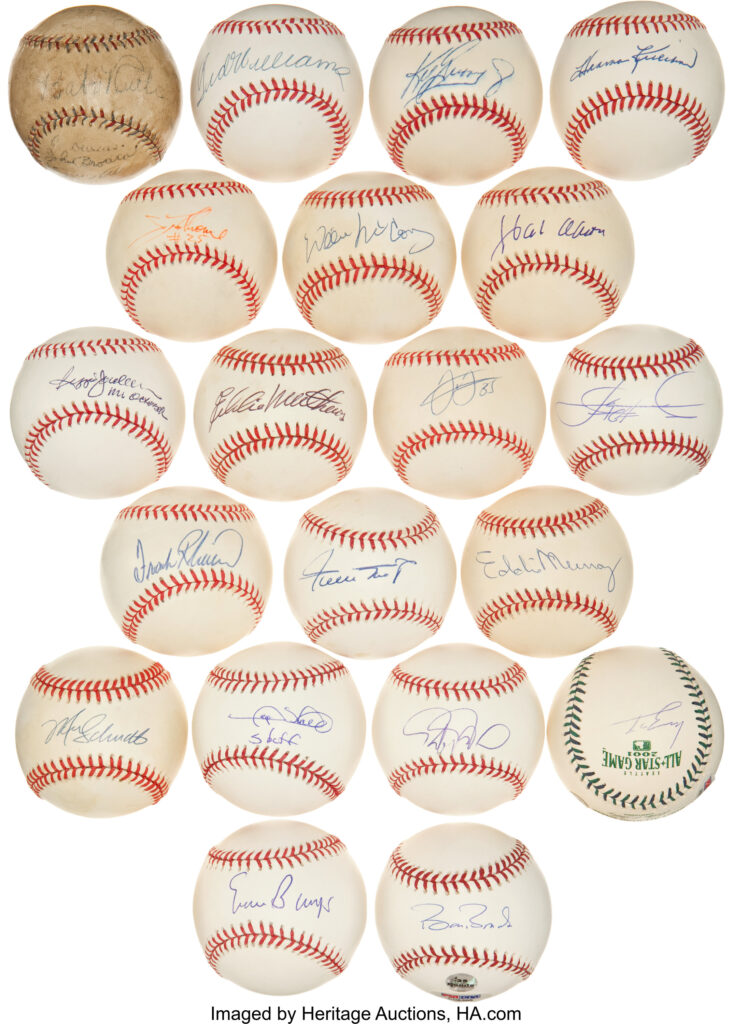
We collectors know that scarcity, provenance and player popularity all shape the market for signed memorabilia. Yet there is another factor that quietly eats away at the value of a baseball or photograph: light.
Left unchecked, ultraviolet (UV) and visible light will fade the ink on a baseball, turning a once‑bold autograph into a ghostly scrawl.
Because a signature’s legibility is a major driver of price, a serious fade can have a serious financial impact. Collectors often see autographed balls with light, hard‑to‑see signatures sell for half the price of comparable pieces with strong ink.
This guide explains why fading happens, why it matters for your investment and your legacy, and most importantly, how to stop it.
Why It Matters
Fading is permanent. Light damage is permanent and irreversible. When ultraviolet radiation and high‑energy visible light hit dyes and pigments, they break chemical bonds and cause the signature to fade. No amount of professional conservation can restore the original intensity once it has been lost.
Damage is cumulative. Light damage follows the reciprocity principle: dim light for a long time can cause as much fading as bright light over a short period. Exposing a ball to even moderate room lighting all day, every day, still adds up.
Collectors pay for boldness. Professional grading companies evaluate autographs on a 10‑point scale; low grades are assigned when a signature is noticeably faded or only partly visible. Autographs in the “Very Good” range (around 50 % visible) receive low grades, which collectors translate into lower bids.
In practice, pieces with weak signatures often sell for 40–70 % less than balls with the same player’s autograph in crisp ink.
Prevention is inexpensive. Good storage, display rotation and a few affordable materials can drastically slow fading. Unlike player performance or macro‑economic trends, controlling light is entirely within your power.
The science of light damage
Chemists and conservators break light‑induced damage into three variables: intensity, duration and material sensitivity.
The higher the light level (lux), the longer an item is exposed and the more light‑sensitive the ink or leather, the faster the damage accumulates.
UV vs. visible light
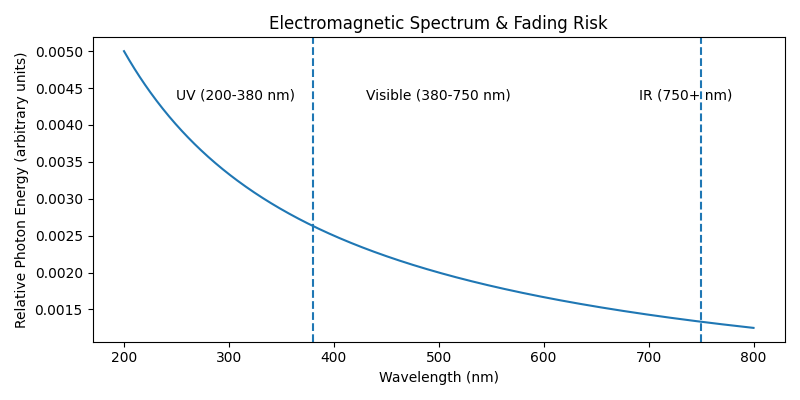
Ultraviolet rays carry more energy than visible light and therefore initiate chemical reactions faster. They can break down chemical bonds and fade the color in an object. Because of this, museums take special measures to reduce or eliminate UV.
But visible light also damages autographs. The Library of Congress, whose objective is to preserve and provide access to a rich, diverse and enduring source of knowledge warns that even when all UV and IR [infrared] are removed, visible light is still damaging and must be controlled.
In other words, a ball in a case near a bright window will fade regardless of whether the glass blocks UV.
Cumulative, irreversible loss
The LoC notes that light causes fading, yellowing, darkening, bleaching, embrittlement and color change, and that these changes cannot be undone.
Because fading is cumulative, the total dose of light is what matters.
Material sensitivity
Different inks and substrates have different lightfastness. Autographs signed with dye‑based Sharpies on glossy helmets or photos are far more vulnerable than those signed in blue ballpoint pen on tanned leather.
White baseballs themselves are also prone to yellowing when exposed to light, which can make signatures appear lighter and further reduce eye appeal.
How fading translates into dollars
Autograph value is subjective, but market data show clear patterns:
- Grading standards. Third‑party authenticators (PSA, Beckett, JSA) grade signatures from 10 (Gem Mint) to 1 (Poor) based on legibility. A “Very Good 3” is described by graders as a signature that is noticeably faded throughout—only about half of the ink is visible. This grade signals to bidders that the autograph is not strong.
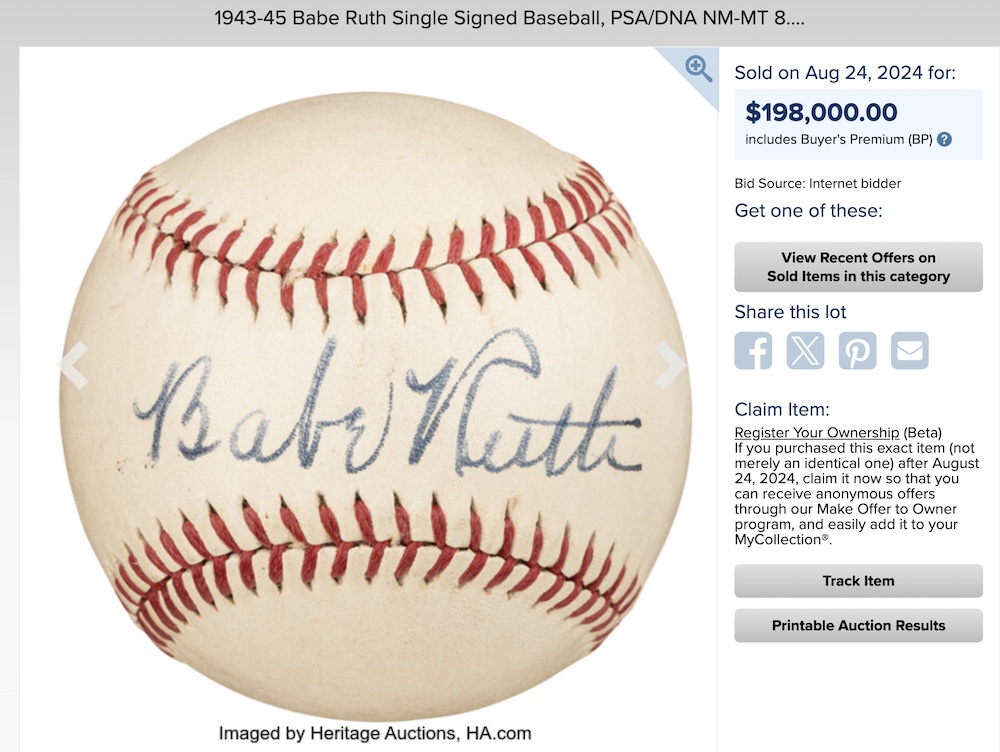
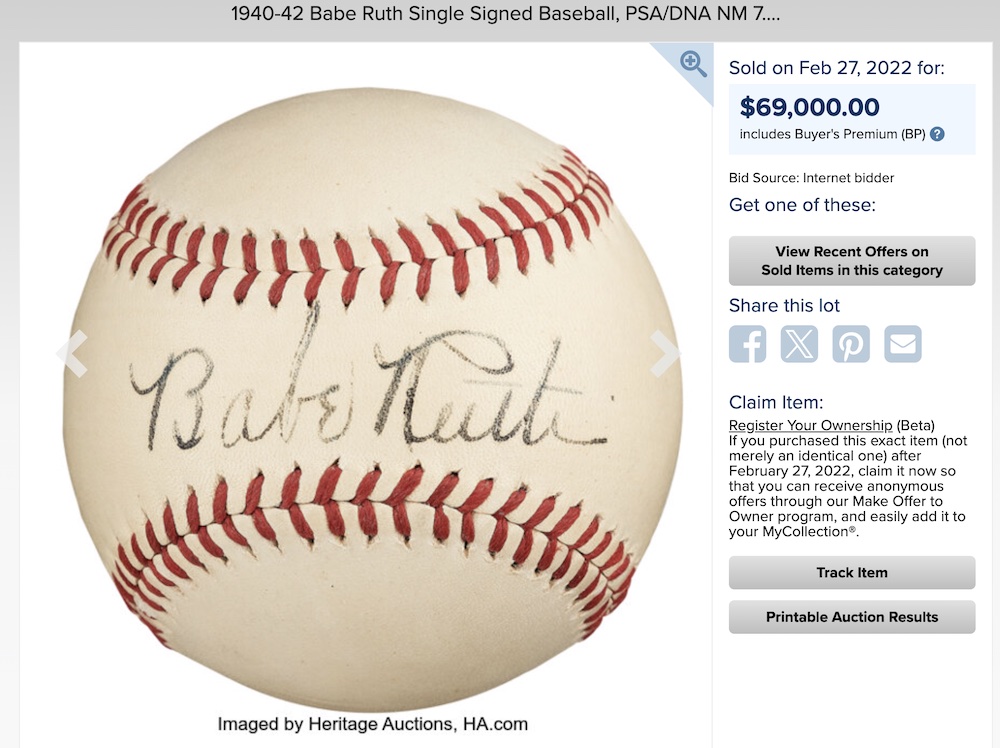
- Eye appeal drives price. When collectors compare similar balls—same player, same league ball, same authentication—the ball with the stronger signature commands a premium. Auction catalogs routinely note when a signature is “strong” (often scoring 8–10/10) or “light/faded.” The latter usually sells for 40–70 % less than the former. For example, a Babe Ruth single‑signed ball with a bold signature can reach mid‑six‑figure prices, while those where Ruth’s autograph is faded or partially visible may sell for a fraction of that.
- Liquidity. Weakly signed pieces take longer to sell and may attract bargain hunters rather than passionate collectors. Dealers often decline faded balls outright or offer pennies on the dollar because they know their customer base demands bold signatures.
Public auction descriptions reveal how sellers and bidders treat faded autographs:
| Example | Evidence of fading | Impact on value |
| Stan Musial single‑signed baseball (Heritage Auctions) | The catalog description for a Musial ball notes that the “signature is now faded”. Collectors know that Musial is a relatively common signer, so bold single‑signed balls routinely sell in the hundreds of dollars. Pieces with faded signatures attract much lower bids and can struggle to reach half of a strong Musial ball’s price. | Highlights that condition (faded ink) is flagged to bidders; the muted price reflects reduced eye appeal. |
| Babe Ruth signed balls | Price guides and dealers routinely note that Ruth balls with “strong, bold” signatures can sell in the $300,000–$500,000 range, while those with “light” or “faded” signatures may fetch tens of thousands—a fraction of the bold examples. | Shows how even iconic autographs are discounted when the ink fades. |
| Modern star balls | A signed ball from a current Hall of Famer like Derek Jeter might bring $600–$800 with a sharp autograph but drop to a few hundred dollars if the signature is light or patchy. | Demonstrates that the discount applies across eras and players. |
These examples illustrate the pattern rather than provide exact price ratios. The key takeaway is that fading directly reduces demand and, therefore, realized price. Buyers view faded signatures as less desirable because the autograph, the very reason the ball has value, is difficult to enjoy.
Twelve things you can do right now
Protecting your memorabilia from light damage doesn’t have to be expensive or complicated. Below is a set of actionable steps based on museum best practices and collector experience. None of these require buying a specific brand of case; they are practical, low‑ or no‑cost measures you can implement immediately.
- Remove items from direct sunlight. Sunlight combines intense visible light and high levels of UV. Display balls and photos on interior walls or shelves away from windows. Draw blinds or curtains during peak light hours.
- Reduce overall light exposure. Remember the reciprocity principle: reduce both intensity and duration. Use lower‑wattage bulbs and turn lights off when you leave the room. For particularly prized pieces, display them only for special occasions and store them in the dark the rest of the time.
- Switch to LED lighting. LEDs emit very little UV and less heat than incandescent or halogen bulbs. While they can still cause fading over time, they are safer than other household light sources.
- Install UV‑filtering window film. Adhesive films applied to windows can cut UV transmission by 95 % or more. Combine film with curtains or shades for best results.
- Control the climate. High humidity can accelerate deterioration; low humidity can make leather brittle. Aim for 35–50 % relative humidity and 65–72 °F (18–22 °C). Avoid storing memorabilia in attics or basements.
- Use archival storage materials. For photos, tickets or flat items, choose acid‑free, lignin‑free folders, sleeves or boxes. For loose baseballs, wrap them in acid‑free tissue or unbleached cotton when not on display. Avoid PVC or vinyl plastics that off‑gas chemicals.
- Choose the right pen for future signings. On baseballs, blue ballpoint pen is widely regarded as the most stable; on glossy photos or helmets, use archival pigment or oil‑based paint pens rather than dye‑based markers. Dye markers fade faster and can bleed.
- Add spacers in frames. If you frame a photo or ticket, use spacers or matting so the inked surface doesn’t touch the glazing. Never laminate memorabilia; lamination is irreversible and accelerates deterioration.
- Rotate displays. Give your memorabilia rest periods in dark storage. Museums often limit exhibition of sensitive items to a few months every several years.
- Document condition now. Take high‑resolution photographs of each signature under neutral light. Store the images and notes about the date and display conditions. You’ll have a baseline for future comparison to see if fading occurs.
- Perform a home UV check. For a quick, non‑scientific test, shine a UV flashlight through your display case onto a UV‑reactive test card. Less fluorescence indicates better UV blocking. If the card glows brightly, consider upgrading the glazing or adding UV film.
- Maintain provenance and insurance. Keep certificates of authenticity (COAs), receipts and provenance documents in a safe place. If your collection is valuable, talk to your insurance agent about scheduling items and updating condition photos; insurers may require documentation if a claim arises.
Common myths & mistakes
- “UV glass makes sunlight safe.” UV‑filtering glazing is critical but does not make bright windows safe. Visible light still fades ink, so avoid sunlit locations entirely.
- ““LED lights can’t cause fading.” While LEDs are safer than fluorescents, they still emit visible light that contributes to the cumulative dose. Prolonged exposure under bright LEDs will still fade signatures over time.
- “I can restore a faded autograph.” Conservation treatments can sometimes stabilize further deterioration but cannot restore lost ink.
- “Plastic top loaders are fine long‑term.” Many inexpensive card sleeves are made of PVC or vinyl, which release chemicals that can yellow paper and degrade ink. Use archival polypropylene, polyethylene or polyester.
Quick 10‑minute fix checklist
- Move your signed ball or photo away from windows.
- Swap any nearby bulbs for low‑wattage LEDs.
- Close blinds or curtains during peak sunlight.
- Wrap photos or tickets in archival sleeves. Wrap balls in unbleached cotton or acid‑free tissue.
- Photograph your autograph under neutral light and note today’s date.
- Put a UV window film on the glass nearest your display.
- Turn lights off when you leave the room.
- Schedule a reminder to rotate displays every few months.
- Check humidity with a hygrometer and adjust with a dehumidifier or humidifier as needed.
- File away COAs and receipts in a dry, dark place.
Final thoughts and next steps
Protecting an autograph is about more than preserving ink. It’s about honoring the moment, the player and the memories tied to that signature.
Light damage is a slow thief; it doesn’t announce itself until the loss is obvious and irreversible.
Moving your memorabilia out of the sun, reducing light exposure, choosing archival materials and documenting condition are things you can do right now to safeguard your investment.
Collectors often say that a faded signature can cut a ball’s value in half. While the exact percentage varies by player and market, the underlying truth is clear: buyers pay for clarity and eye appeal.
The small effort you invest in controlling light today can preserve tens of thousands of dollars in future value and more importantly, ensure that the next generation sees the autograph as vibrant as the day it was signed.